
USMNT analysis
Even amid youth-oriented USMNT camp there is a strong YNT emphasis

THE UNITED STATES NATIONAL team is now in the middle of a very long camp that combines the September and October windows. The benefit to having such a long camp is that head coach Mauricio Pochettino, his staff, and U.S. Olympic coach Steve Cherundolo (who has been with the team) will get an extended look at what could be a huge core of the coming Olympic team.
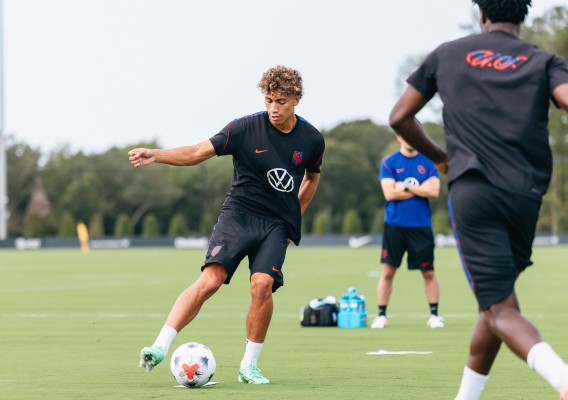
Of course, the 4-1 win over Peru was an encouraging start to camp and it was the U.S. team’s young players that shined brightest. Justin Ellis, 19, scored the opening goal. Mathis Albert, 17, drew a penalty. Julian Hall, 18, scored and assisted. Meanwhile Cavan Sullivan and Peyton Miller both had encouraging performances on the offensive side.
In total, 11 Olympic players made their USMNT debut. Of those Olympic-eligible players, eight are also eligible for the 2027 U-20 World Cup: Sullivan, Miller, Hall, Albert, Ellis, Zavier Gozo, Adri Mehetmi, Neil Pierre.
After a successful performance against Peru, there is a common discussion in the media, fans, podcasters, about whether these players are “beyond” U.S. youth national team duty. But the likely answer is no, and the signs point to these players shifting to the Olympic team or possibly even the U.S. U-20 World Cup team.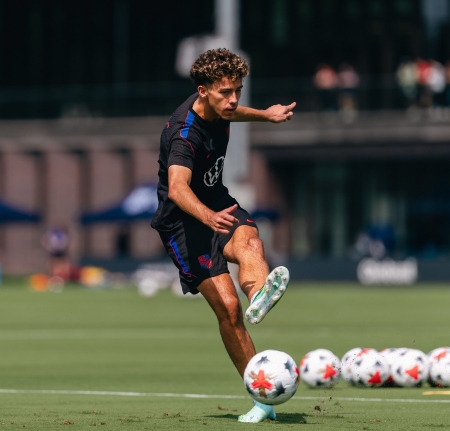
There are a lot of factors to consider.
Pochettino’s initial statements
Ahead of the USMNT camp, Pochettino spoke to the media and made it very clear he was not happy about certain young players opting out of youth national team call-ups.
“[It’s important that young players] want to be involved,” Pochettino said. “[When a player in MLS or elsewhere] has the possibility to join the under-18 or under-19 national teams, or the Olympic Games, it’s so important to be part of them. That is another habit that we need to change.”
“Sometimes the coaches say, you know, ‘I have a 17-year-old guy that plays in MLS,’ but when the under-19 national team calls they say: ‘No, they need to rest,’” he added. “If you’re 17 and need to rest? Ay, ay, ay. You have a big problem.”
Pochettino wants players to accept youth national team assignments and to take them seriously and he stresses this has been a habit that exists now within younger American players that needs changing.
There is a lot of evidence for Pochettino now to point to the importance of the Olympic team. At the 2026 World Cup, the successful national teams of champions Spain, semifinalists France, and quarterfinalists Morocco all drew heavily from their 2024 Olympic teams to fill key parts of their World Cup rosters.
The idea that Olympic soccer is an “American” or “South American” priority and nowhere else is simply not the case anymore. It is a tricky tournament to successfully qualify, but when given the chance (as the U.S. team has as the hosts), it is a magnificent opportunity. Spain has taken full advantage of the opportunities at the last two Olympic games where their gold medal (2024) and silver medal (2021) teams were instrumental towards building their national teams.
Pochettino and U.S. Soccer are very much on the same page here.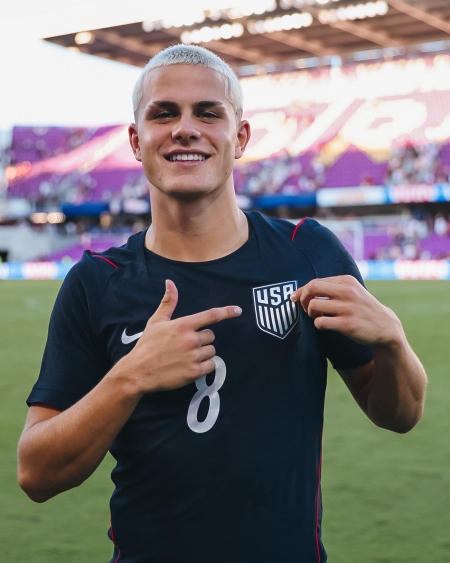
“You likely understand the importance of the Olympics.” U.S. Soccer COO Dan Helfrich told ASN in May. “And there's a lot of data that suggests that success in youth World Cups and in Olympic cycles on the men's side, create, accelerate player development and create the conditions for success in subsequent World Cups.”
Cherundolo’s presences
Obviously, having Cherundolo involved in this camp (he was also in Orlando for the win over Peru) is a signal that many or possibly even all the Olympic-eligible players could report to those camps.
Pochettino said the decisions over each player will be made collectively.
“So it’s collaborative work.,” Pochettino said in his Futbol de Primera interview with host Andres Cantor. “We analyze things together, look at the positives and the things that need improving, and make decisions together.”
“I think what is best for U.S. Soccer is for decisions to be made collectively. The decision to bring these young players in belongs to all of us. It isn’t Mauricio’s decision or Steve’s decision or one particular person’s decision. It’s a decision made by the entire structure.”
U.S. Soccer has been clear that the Olympics on home soil is a priority for the federation and Pochettino has said he understands the federation wants to be successful at LA2028. If Pochettino is not solely making the decision over each of the players (as he said to Futbol de Primera) it suggests that some top young players who are good enough for both the 2028 Copa America team (which is still only hypothetical and not announced) and the Olympic team might find their way to the Olympic team.
“You will see us strategically investing more attention and resources and focus on the youth national team games program, on elevating the men's Olympic team to prepare us to be in the best competitive position,” Helfrich said just before the World Cup. “I think those things will have a significant role in the competitive preparation for our future men's World Cup and other major tournament performances.”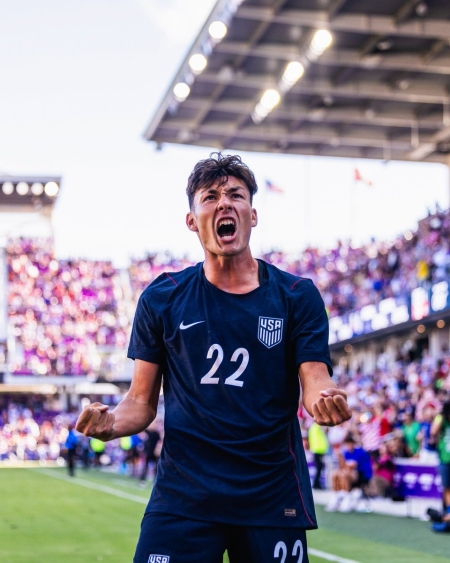
Helfrich added: “what the professional technical analysis would tell us, which would match what we see with our own eyes, is that you our player pool right now in the age 17-21 group on the men's side is a very talented. Again, we need to work with all the professional teams that they are part of to grow and develop those players. But it's a high potential player pool and we're going to lean into that in the years to come.”
Veterans make telling statements
In the lead-up to the Peru game, U.S. Soccer held its media availability in interesting fashion. Each day, a veteran player was selected alongside a youth player and typically there was a theme. Miles Robinson was interviewed alongside Neil Pierre, with the link being two central defenders of different generations. Then Tyler Adams was alongside Adri Mehetmi with the link being two central midfielders who have a Red Bull New York foundation. Then there was Chris Richards and Zavier Gozo who are now both at Crystal Palace.
But was most telling was that each of the veterans spoke about their respective youth national team duties while sitting next to each of the young players. The veterans each brought up how important youth World Cups shaped their careers. In the case of Robinson, he spoke to his experience as an overage player on the last Olympic team.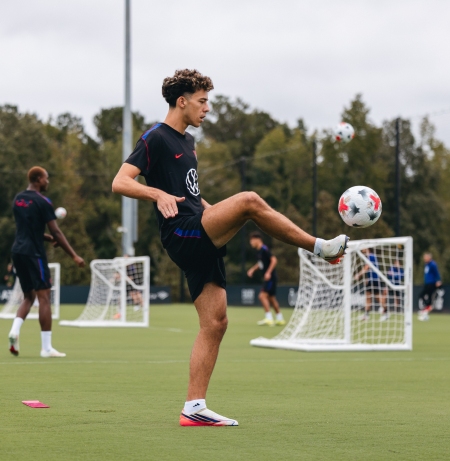
“We can't take for granted the opportunity to play with the youth national team,” Adams said while Mehetmi was next to him. “I think it's the same as a senior national team. Obviously, that's the goal that you want to reach, but you have to take the necessary steps. I played in U-17 World Cup. I played up in in U-20 World Cup, and I think that prepared me for the international level here because the international game is much different than obviously playing in your respective league.. It's incredibly important that they stay humble and continue to do the work.”
Richards then spoke of his time with the U.S. U-20 World Cup team and how it was important to familiarize himself with the best players of his generation – who then moved to the full national team around the same time.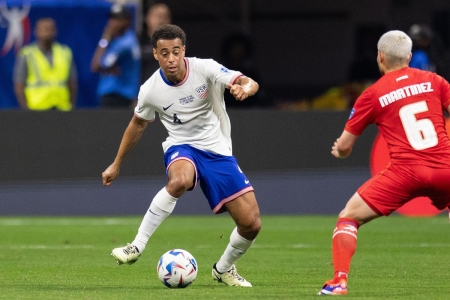
“I remember my first camp. I had guys like Tim Ream, John Brooks. I think those are obviously the two main people since they are in the same position as myself. But I had a lot of guys I played youth national team with as well at those camps, so I think you know being able to get the experiences that we did with the youth national team with the under 20 cycle that I was involved with, you know met guys like Mark McKenzie, Timmy Weah, Sergino, and then eventually we made it to the senior national team together.”
Pochettino and top World Cup and Premier League veteran players speaking about youth World Cups in a camp dominated by young players is likely not a coincidence. It’s likely a sign to these young players that while they are promising, their time with youth teams is likely not over.
If these statements affect these top young players, it will likely have a rippling effect to other key young players who are not at this camp. It will send a strong signal to reinforce Pochettino’s message that youth duty needs to be taken seriously. Despite the promise shown against Peru, Pochettino likely doesn't want these players to skip the important steps that LA 2028 or the 2027 U-20 World Cup can offer.
